How to Grow Eggplants
Growing Conditions
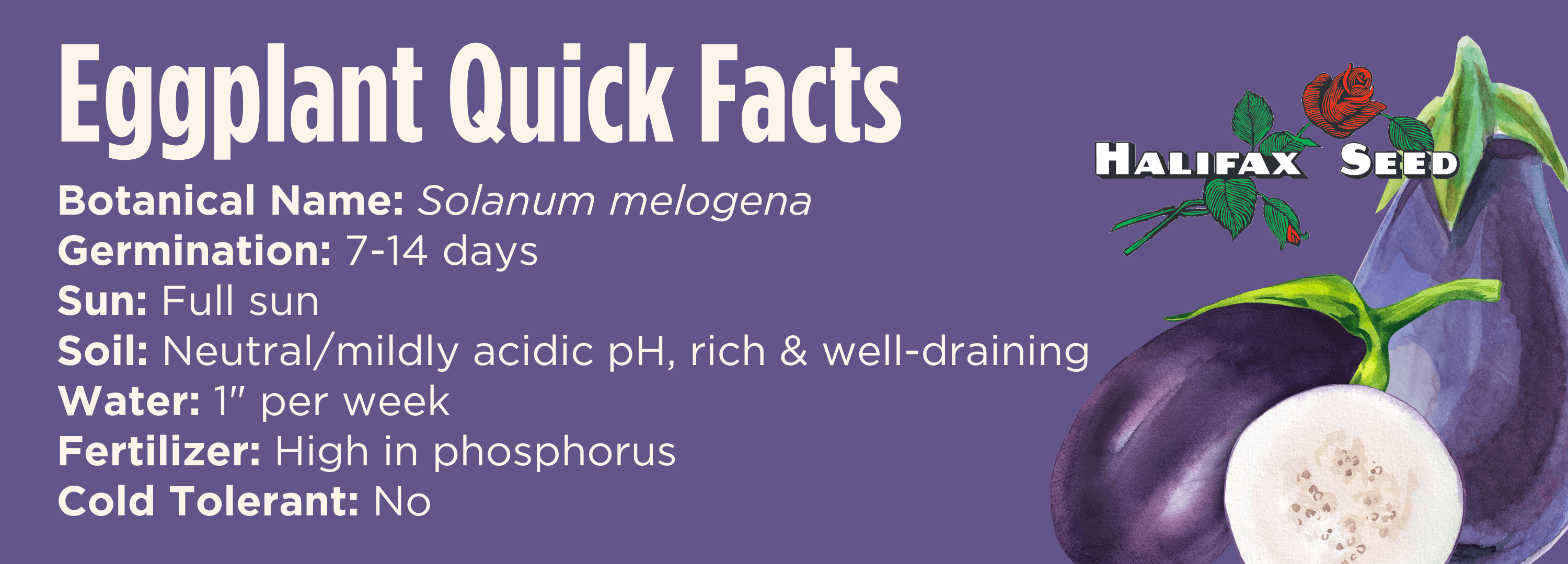
EGgplants are heat-loving plants that require full sun, rich soil, and warm weather. Choose a location with warm, well-draining, rich soil that receives a minimum of six hours of sun per day. Prepare your soil for planting by amending with organic matter like compost, worm castings, and kelp meal.
Starting
Start your eggplant seeds 6-8 weeks before the last frost. In warm soil, eggplant seeds will germinate in 7-14 days. To speed up germination time, use a heat mat to keep your soil warm (between 27 and 32°C). Once your seeds have sprouted, keep them in a warm, bright location such as a south-facing windowsill or under grow lights. Check soil moisture regularly and water as needed. When seedlings produce two sets of true leaves, they may be transplanted up into 4" pots. Ensure your seedlings receive enough light or they will become thin and leggy. If needed they can be fertilized with a diluted fertilizer, and may need to be potted up again before it is time to transplant them out.
Eggplant seedlings must be hardened off before they are transplanted outside. Start on a mild day and place your seedlings outside for about an hour, then bring them back in for the rest of the day. Increase the amount of time they spend outside each day until they're ready to move outside permanently. For the first week, keep seedlings out of direct sunlight and strong wind and don't move them outside if the weather is harsh. When the seedlings are ready and the risk of frost has passed they may be transplanted into the garden. When spacing your pepper plants, consider their mature size to allow for proper airflow between plants.
Find our full guide to seed starting here.
Care
Eggplants should be planted in a full sun area with rich, well-draining soil. Water well after transplanting and feed with a fertilizer that encourages blooms. Eggplants are heavy feeders and can be fertilized as often as every other week. Avoid using fertilizers too high in nitrogen which will encourage green leafy growth but no flowers or fruit. Water regularly and deeply as needed depending on the weather in your region. Peppers require 1-2" of water per week. Mulch can be added around the base of each plant to help retain water in the soil.
Pests and Diseases
Aphids - Small green, black, or brown insects that feed on the sap of garden plants. You'll find them under leaves, at blossom tips, and in the joints of stems.
Flea Beetles - Small black beetles that feed on leaves and stems, leaving holes and discoloured patches.
Blossom End Rot - A calcium deficiency often caused by inconsistent watering that causes dark spots on the blossom end of fruit.
Leaf Spot/Blight - Fungal infections that cause dark spots on foliage.
Powdery Mildew - White mildew on the top surfaces of leaves, starting as small spots and growing to cover the entire leaf.
Crop rotation, garden cleaning, and proper spacing between plants are the best ways to prevent problems caused by pests and diseases. Diatomaceous earth can be used to control crawling pest species, while sticky traps will catch flying pests. Row covers and insect netting can also prevent travelling pests from landing on your crops and causing damage. Ensure good drainage in your chosen planting spot to prevent problems with fungus and rot. Contact us for more specialized pest control methods such as beneficial nematodes.
Harvest
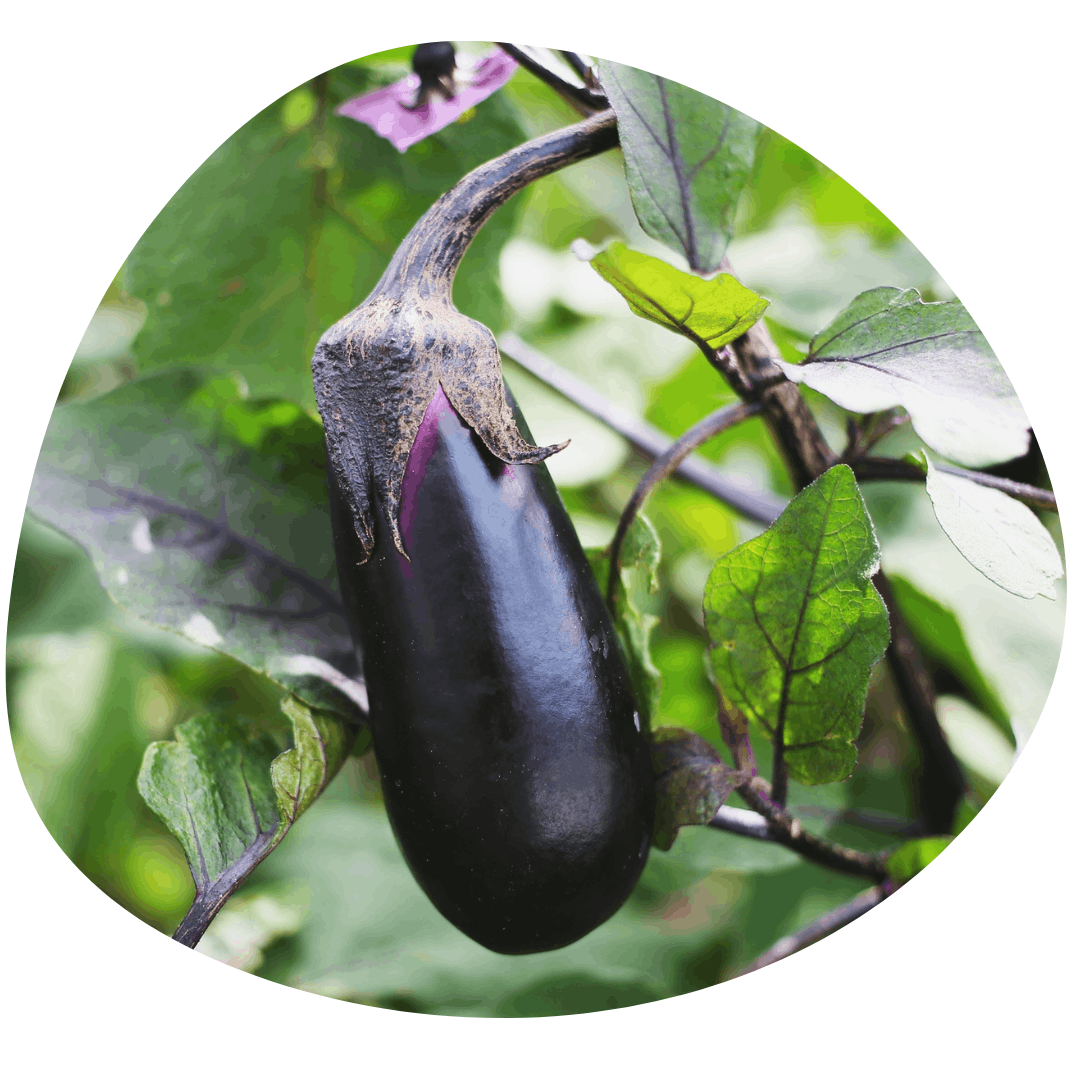
It takes 60-85 days from transplant for eggplants to reach maturity, depending on the variety. Harvest fruit young, as soon as the skin turns dark purple, before too many seeds develop. Once mature, plants are prolific, so check every few days and harvest often to encourage more growth.
Harvest your eggplants by cutting them off of the plant with a clean pair of pruners. Eggplants can be stored in the fridge for a week or so. Don't wash or cut your eggplants before storing, as their skin is delicate and easily damaged.