How to Grow Broccoli

Growing Conditions
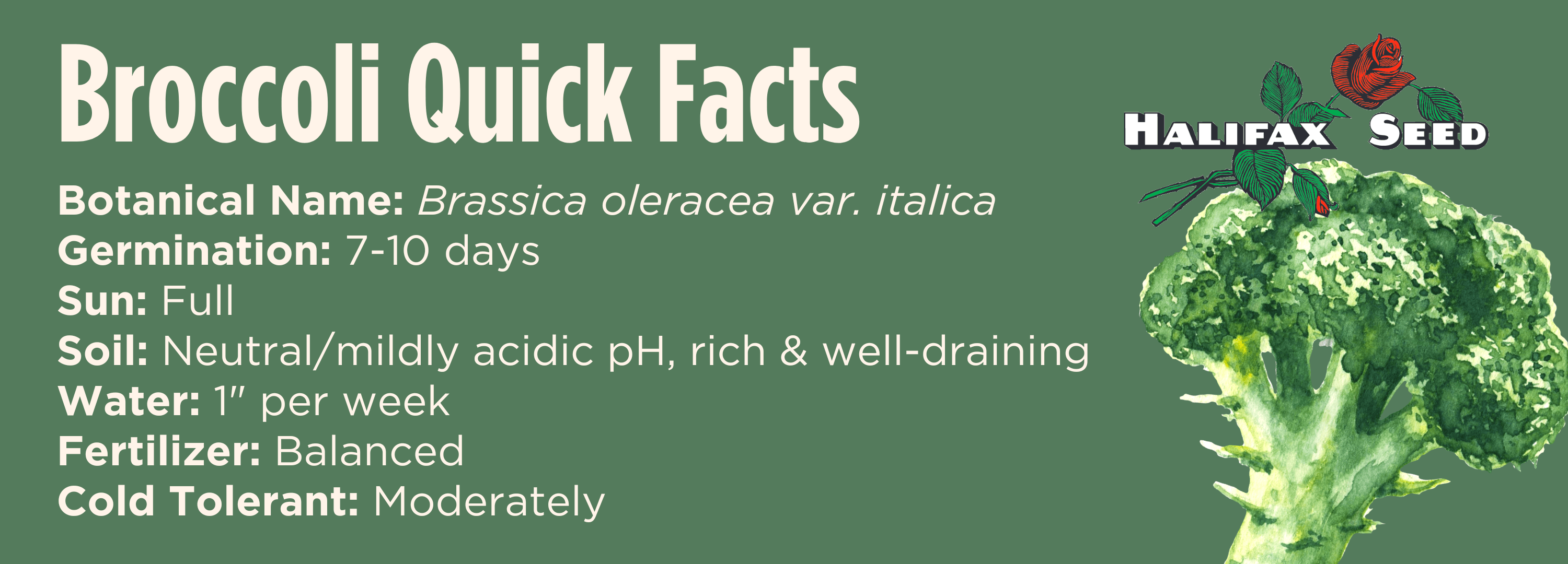
Broccoli thrives in cool weather and will do best in the shoulder seasons of spring and fall. It's a moderately heavy feeder and prefers rich soil, so amend your planting area with fresh compost before planting. Soil should be well draining and slightly acidic. Choose a location with full sun that allows for wide spacing of plants.
Starting
Start your broccoli seeds indoors 6-8 weeks before the last frost in your area. For a fall harvest, start your seeds 6-8 weeks before the first fall frost. Your broccoli seeds should germinate within 7-10 days. Once sprouted, thin your seedlings to the strongest plants and allow them to develop under bright light until ready to transplant. Once your seedlings have 4 -6 leaves and the weather outside has warmed, you can begin to harden them off before planting them in your garden.
While broccoli has some tolerance to cold, young seedlings are not hardy and should be hardened off in a sheltered area when weather is mild. Start on a mild day and place your seedlings outside for about an hour, then bring them back in for the rest of the day. Increase the amount of time they spend outside each day until they're ready to move outside permanently. For the first week, keep seedlings out of direct sunlight and strong wind and don't move them outside if the weather is harsh. When the seedlings are ready and the risk of frost has passed they may be transplanted into the garden. When spacing your broccoli plants, consider their mature size to allow for proper airflow between plants. We recommend at least 12-24" between plants.
Find our full guide to seed starting here.
Care
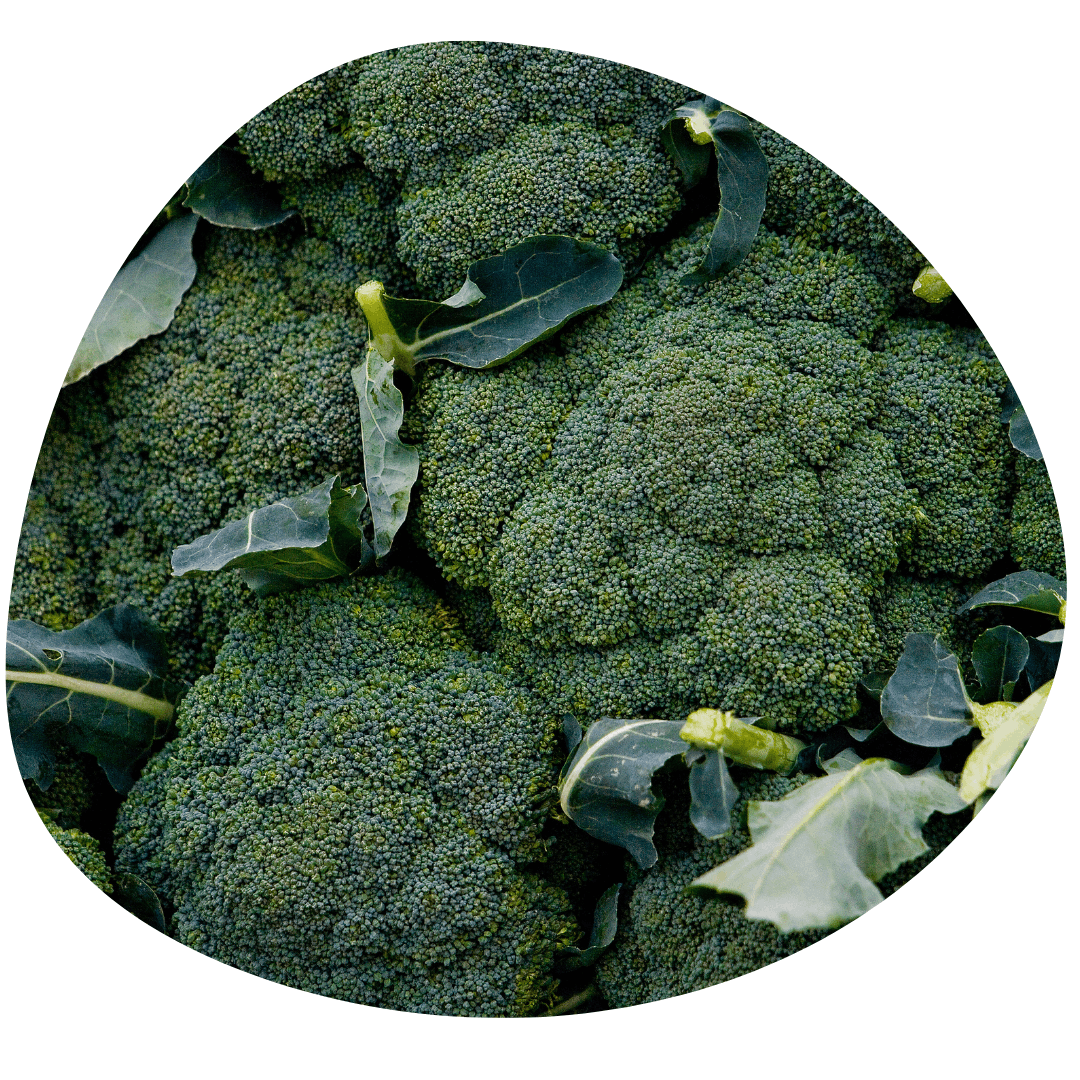
Broccoli should be planted in a full sun area with well-draining soil. Water well after transplanting and feed with a balanced fertilizer. You can fertilizer your broccoli plants again about 3-4 weeks after transplant. Fertilizers that are too high in nitrogen may prompt excessive leafy growth at the expense of large heads. Keep the soil around your plants consistently moist, but avoid getting water on developing heads to decrease the likelihood of rot.
Mulching around the base of the stems can help retain moisture in the soil, suppress weeds, and keep the soil cool. When the broccoli heads begin to develop, you can hill up compost or soil around the base of the stem to support top growth.
Placing row cover or insect netting over your broccoli plants can help prevent pest damage. Covers should be placed preventatively, before pests have a chance to establish on your plants.
Pests and Diseases
Aphids - Small green, black, or brown insects that feed on the sap of garden plants. You'll find them under leaves, at blossom tips, and in the joints of stems.
Cabbage Worms - Small green caterpillars that chew large holes in the leaves of brassica plants and other species.
Clubroot – A fungal infection that causes wilting and stunted growth; roots may appear swollen or clubbed.
Downy Mildew - Yellow or white patches that form on the leaves of plants, eventually turning brown and preventing photosynthesis.
Crop rotation, garden cleaning, and proper spacing between plants are the best ways to prevent problems caused by pests and diseases. Diatomaceous earth can be used to control crawling pest species, while sticky traps will catch flying pests. Row covers and insect netting can also prevent travelling pests from landing on your crops and causing damage. Ensure good drainage in your chosen planting spot to prevent problems with fungus and rot. Contact us for more specialized pest control methods such as beneficial nematodes.
Harvest
Harvest your broccoli before the heads begin to flower. If you see any sign of yellow flowers, don't hesitate to harvest. Cut the central head with 5-6" of stem, and leave the plant to continue to grow and produce side shoots. Shoots will continue to appear for several weeks, and can be encouraged with an extra application of fertilizer. Some hybrid varieties are bred to produce large center heads and may grow limited or no side shoots.